


Developing a plastic component is one thing – producing it thousands of times with consistent quality is another. Between the initial idea and ongoing series production lie numerous decisions that determine quality, cost, and delivery capability.
For companies that are having plastic parts manufactured for the first time or are looking for a new production partner, transparency in the process is crucial. This article shows how a component is created at a medium-sized plastics specialist—from the initial conversation to series production—and what matters at each stage.

The key points at a glance
- Phase 1 – Requirements and material. Loads, standards, quantities and surface requirements are clarified first; the material follows from them.
- Phase 2 – Design and mould concept. The part is reviewed for manufacturability, then cavity count, gating system and cooling are defined.
- Phase 3 – Mould making and sampling. The mould is built, first parts are moulded, measured and documented. One to three correction loops are typical.
- Phase 4 – Production start-up. The process is validated under series conditions and the parameters are frozen.
- Phase 5 – Series production. Ongoing quality assurance and scheduled mould maintenance keep part quality stable.
Phase 1: Requirements analysis and material selection
It all starts with a conversation
Every project begins with a thorough requirements analysis. Together with the customer, we clarify:
- What mechanical, thermal, and chemical loads must the component withstand?
- Are there any standards or approvals (e.g., UL94, FDA, REACH)?
- What quantities are planned—and over what time frame?
- What surface requirements apply (visual quality, texture, color)?
- Are there any geometric features (undercuts, tight tolerances, thin walls)?
Material recommendation with foresight
Based on this analysis, our engineers recommend the optimal material. In doing so, we consider not only the technical requirements, but also processability, availability and costs. Whether glass fiber–reinforced polyamide for mechanically stressed components, flame-retardant ABS for electrical housings or food-grade PP – the choice of material lays the foundation for a successful project.
Phase 2: Design for manufacturability and tooling concept
Design for Manufacturing
Before the tool is made, we check the component design for manufacturability. Wall thicknesses, draft angles, gate position and weld lines – all these factors influence the later part quality and cycle time. The earlier we are involved, the more optimization potential we can realize.
The tooling concept
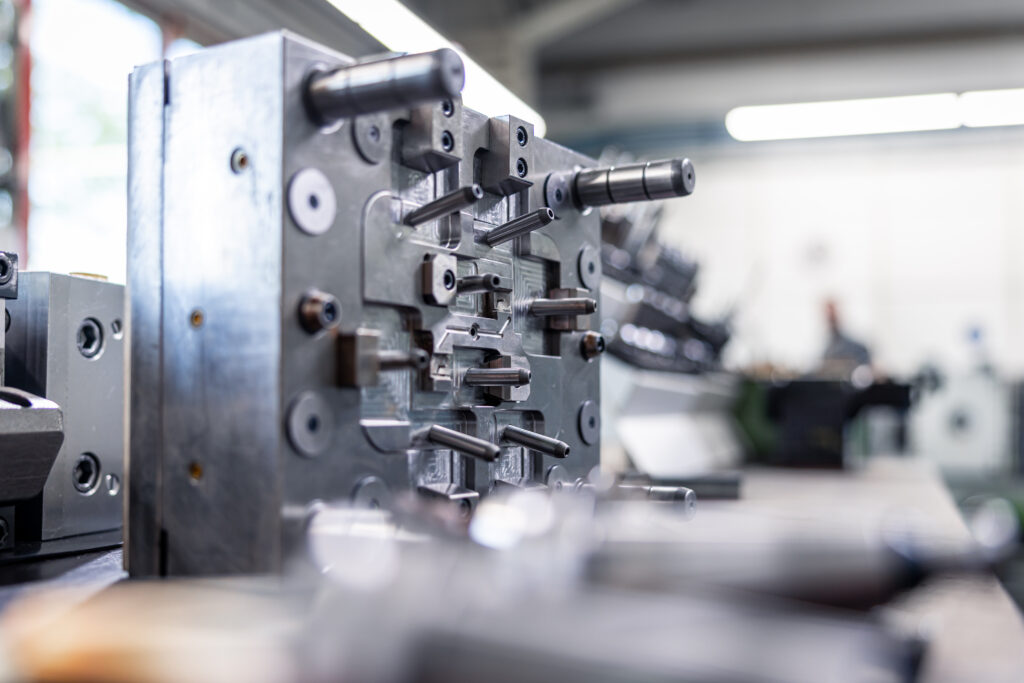
Our in-house toolmaking department develops the tooling concept based on the approved design. In doing so, we define: the number of cavities, the gating system (cold runner or hot runner), the cooling concept, the demolding strategy, and the tool material. The advantage of short distances: toolmaking and injection molding production operate under one roof—questions are resolved in minutes, not days.
Phase 3: Tool manufacturing and sampling
Precision in toolmaking
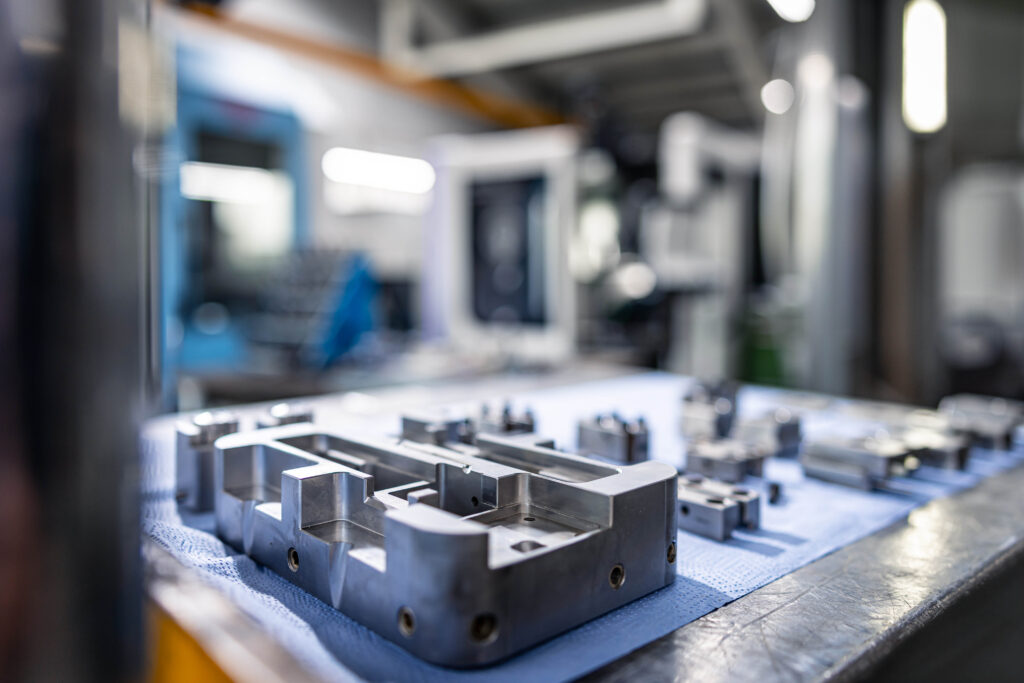
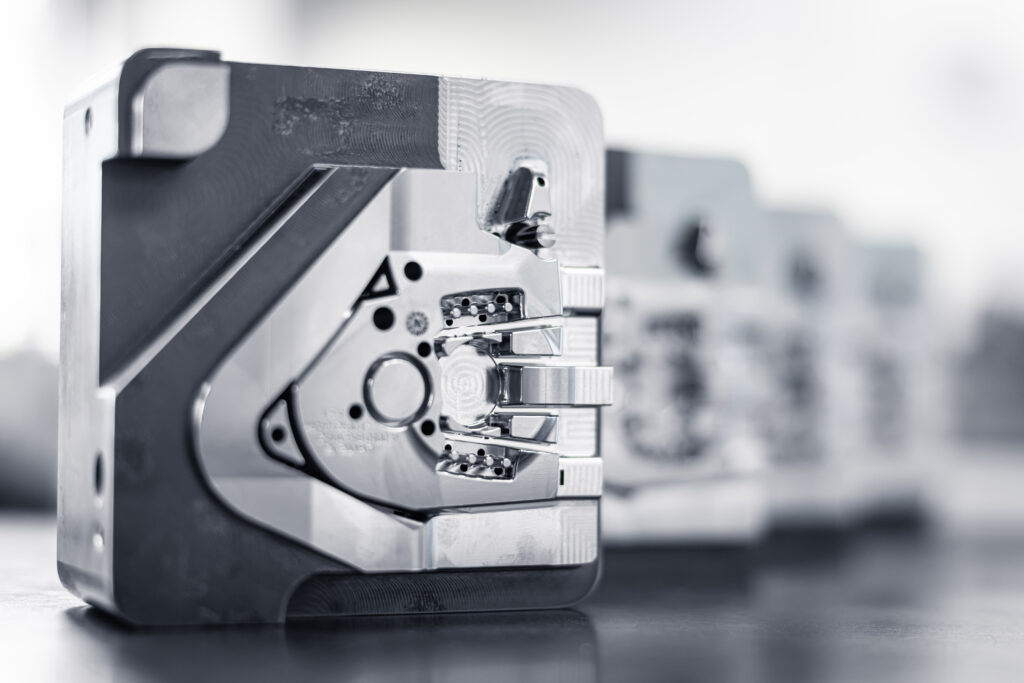
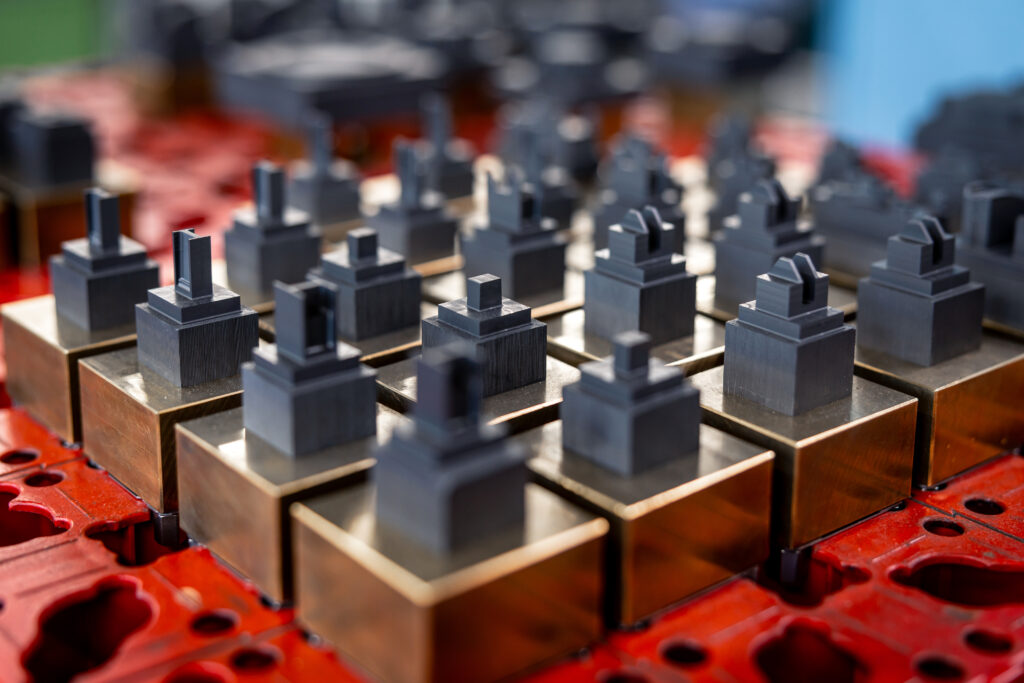
Tool manufacturing is the core of the entire process. Using modern CNC milling machines and EDM equipment, molds are produced with accuracies in the hundredth-of-a-millimeter range. Depending on the complexity, tool manufacturing takes between four and twelve weeks.
Sampling: The moment of truth
During initial sampling, the tool is sampled on the injection molding machine for the first time. We produce initial parts, measure them completely, and create an initial sample inspection report (EMPB). Do dimensions, surface, and function meet the requirements? If not, we optimize iteratively – thanks to our in-house toolmaking without time loss due to external service providers.
Typically, one to three sampling loops are required until all parameters are perfectly adjusted. For simple parts, it may also be correct on the first attempt.
Phase 4: Production ramp-up and process validation
From sample part to stable series production
Following approved sampling, production ramp-up begins. In this phase, we validate the entire manufacturing process under series conditions: cycle time, machine stability, scrap rate, and packaging. For automotive customers, we prepare the complete PPAP documentation.
Freeze process parameters
Once all parameters are stable, they are frozen and documented. Each machine, each tool, and each process parameter is clearly assigned. This ensures that the component can be reproduced identically even after a production interruption.
Phase 5: Ongoing series production and quality assurance
Production with a system
In ongoing series production, we monitor every shot. Automatic inline quality monitoring, statistical process control (SPC), and regular sample measurements ensure consistent quality. Our IATF 16949 certification guarantees that these processes not only exist but are also consistently applied.
Tool maintenance and optimization
Injection molds are subject to wear. Regular maintenance intervals extend their service life and ensure part quality. Thanks to our in-house toolmaking, we can carry out maintenance quickly and in a planned manner – without long downtimes or external coordination.
Why a medium-sized specialist?
Large injection molding corporations have impressive machine parks – but medium-sized companies have different strengths:
- Short decision-making processes: From the managing director to the machine operator—all are familiar with your project.
- Flexibility: Changes to the tool or process are implemented quickly, rather than passed through committees.
- Everything under one roof: toolmaking, injection molding, 2K technology, and assembly – no interfaces with subcontractors.
- Personal contact: Dedicated contacts who support your project from the initial inquiry through to ongoing series production.
- Regional proximity: Visits to the toolmaking department and participation in sampling – all easily possible.
Depending on the part, further steps follow on from this process: components combining two materials are produced in two-component moulding, and finished units can be supplied ready to fit through our subassembly assembly. Existing moulds from another manufacturer can be taken over via tool transfer.
Conclusion
The path from prototype to series production is not a leap, but a structured process with clearly defined milestones. Those who take this path with an experienced partner save time, avoid costly missteps, and ultimately receive a component that excels in both quality and cost-effectiveness.
The key factor: Involve your manufacturing partner as early as possible. The more manufacturing know-how is incorporated into the design phase, the smoother the entire process will be – and the better the final result.
Paragraph
Interested in series production?
We are happy to support you from the prototype through to series production.
Frequently asked questions
How long does it take from prototype to series production?
That depends on part complexity, mould scope and the approval documents required. In addition to mould manufacturing, feasibility review, design release, sampling and production start-up all take time. You receive a concrete schedule with the quotation.
How many sampling loops are usual?
Typically one to three, until all dimensions and surfaces are stable. Simple parts may pass on the first attempt. With in-house mould making, each loop mainly costs correction time rather than shipping and external coordination.
What happens if the part design changes during development?
As long as the mould design has not been released, changes can be incorporated without additional cost. After release, the effort depends on which mould components are affected. This is why the design is explicitly released before any steel is cut.
What documentation do I receive for series release?
At minimum an initial sample inspection report with the measured dimensions and the materials used. For automotive customers we prepare full PPAP documentation. The exact scope is agreed per project.
Who owns the mould after the project?
That is a matter of contract and should be settled before mould construction begins — including whether the mould may later be transferred to another manufacturer. We recommend putting both in writing before the design starts.